
Back in the early 2000s, a “tech guy” like a neighbor, a cousin, or a solo freelancer, was often enough to keep a small office running. Nowadays, it’s an entirely different ballgame. The landscape of business technology has shifted so dramatically that you need a strategic professional managing your IT, not an amateur, but not for the reasons you might expect.
415 IT Blog
It’s a common scene in many offices: the accidental IT person. They were hired to handle your marketing or manage your sales, but because they happen to know how to fix a printer or reset a password, they’ve become the unofficial tech support.
While this might seem like a quick fix, it’s actually a silent growth killer for your business. Here is why relying on the office tech whiz is holding you back; and how a professional approach can fuel your success.
It is tempting to call the family tech genius when your office Wi-Fi acts up. Whether it is a niece who builds gaming rigs or a friend who is good with computers, leaning on a hobbyist for business infrastructure seems like a great way to save a few bucks.
In reality, it is one of the most expensive mistakes a business owner can make. Here is why mixing family favors with professional IT is a recipe for disaster.
Chances are pretty good that you know someone—a coworker, friend, or relative—who seems pretty confident that they know their way around technology. Maybe it’s your niece, who was the one to set up your Wi-Fi and spends her time on her self-constructed gaming PC. It kind of makes sense to lean on her for some tech advice for the office, too… doesn’t it?
The short answer: absolutely not.
While your niece may have a bright future ahead of her in the IT industry, there are numerous reasons why relying on her in lieu of a professional is a terrible, self-destructive idea.
If you’re a business owner, you likely view IT as a necessary evil. It’s that line item on your profit and loss report that feels like a black hole; money goes in, and occasionally, your printer still doesn’t work.
The hard truth is that if you are still calling a tech person only when things break, you are paying a hidden tax on your own growth.
Think of that one person in your office—or that one outside vendor—who is the only human on earth who knows why your server hums or which ancient password unlocks the payroll portal. When the system crashes, they swoop in, mutter some jargon you don’t understand, and save the day. You feel relieved, but you really should be terrified. This isn't expertise; it's a hostage situation. By allowing your critical business logic to live inside someone’s head instead of in a documented system, you’ve turned your company's valuation into a single point of failure.
It’s easy to fall into the trap that you have to be the entire C-Suite for your business all in one. You should be running your business, not managing its IT infrastructure, and trying to do it all will only pull your focus away from what matters most. Instead of worrying about endless security threats, unpredictable technology costs, and countless tech support questions, you should work with a managed IT provider.
Does the thought of a sudden system crash keep you up at night? It should, but not for the reason you might think.
While a disaster is the initial shock, it’s the prolonged downtime that follows that truly cripples a business. It’s a slow-motion drain on your resources, and without a proactive strategy, those lost minutes can quickly translate into thousands of dollars in wasted overhead.
Most small business owners don't wake up thinking about network patches or endpoint detection. You’re focused on growth, your team, and your customers. Unfortunately, there is a persistent myth that “small” means “invisible” to hackers.
The reality isn't that hackers are out to get you specifically; it’s that they use automated tools to find any open door. If your door is unlocked, they’ll walk in. It’s not personal—it’s just a math problem for them.
As your business has grown, have you fallen into the tech trap of DIY IT solutions? While you might have started with just a handful of employees, the infrastructure you’ve built is no longer sustainable or reliable. You need professional help if you want your business to stay competitive, and we have just the thing for you.
You want to know what’s scary? Anytime your company’s IT fails and you’re left wondering if you can afford a new piece of hardware or the maintenance to fix what’s broken. When you rely on break-fix IT, you’re basically living in a horror film; you never know when the slasher is going to leap out of the shadows and strike. With managed IT, you can sidestep the scaries and know with confidence you’re taking care of your business’ future.
Here are three reasons why managed IT is the superior option for managing your technology solutions.
Is your business technology a source of uncertainty and frustration? Are you constantly reacting to IT problems when you would prefer to proactively leverage technology to drive your business’ growth? This struggle is often the result of the Executive IT Gap, a phenomenon that traps businesses in an endless cycle of reactive, costly, and inefficient technology decisions that slow down growth.
The way businesses protect their computer networks has changed. Now, every device connected to the network—like computers, phones, servers, and smart gadgets—is a crucial point of defense. This means that each device can be a weak spot if not properly secured.
If you don't use the same security rules for all devices, you're creating an easy target for cyberattacks.
Many business owners, especially those running small or medium-sized enterprises and even startups, often wonder if their company is big enough to justify investing in managed IT services. The common misconception is that outsourced IT support is only for larger businesses with complex networks and hundreds of employees. The fact is that there is no minimum size a business must reach to significantly benefit from managed IT services.
Let me ask you something: how well does your current IT support function?
If your first instinct is to say something vaguely positive, like “good” or “fine,” you’re probably missing out on significant benefits that could come from a more immersive and fleshed-out service delivery, rather than a stopgap meant to preserve the status quo. If your provider has never asked you about the future and your goals for it, it may be time to seek what else is out there.
Regardless of how big or small your business is, chances are you have at least one server unit that holds sensitive data. Ask yourself this question: do you have the knowledge and expertise to properly care for and maintain that server unit? The best way to ensure your business takes care of its server technology is to work with a managed service provider. Here's why:
How do you know when it’s time to fire one of your vendors? Better yet, how do you know when you’re better off firing your IT vendor to find a better option? These kinds of situations can be stressful, but they’re not impossible. We’re here to help you make the call, as well as to offer a better alternative that saves you time, energy, and money.
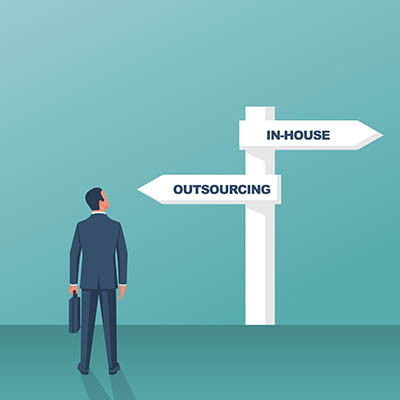
Do you have an internal IT department for your business? Small businesses often don’t have dedicated IT staff, and if they do, chances are they’re overwhelmed with tasks and constantly playing catch-up (IT is a big job, after all). In fact, they might feel like they can never take time off because they’re so busy. If you want to ensure your business always has the IT it needs, then you should consider outsourcing as an option.
Surprises can be exciting, but one part of your business where you don’t want them is in your IT. A server crash, a wireless connectivity outage, or a security threat can all create multiple surprise problems that you simply aren’t ready to handle—particularly in the realm of your wallet. Instead of spinning the wheel and gambling on your IT bill, you can instead treat your IT like a predictable utility cost, and it’s all thanks to proactive managed IT services.